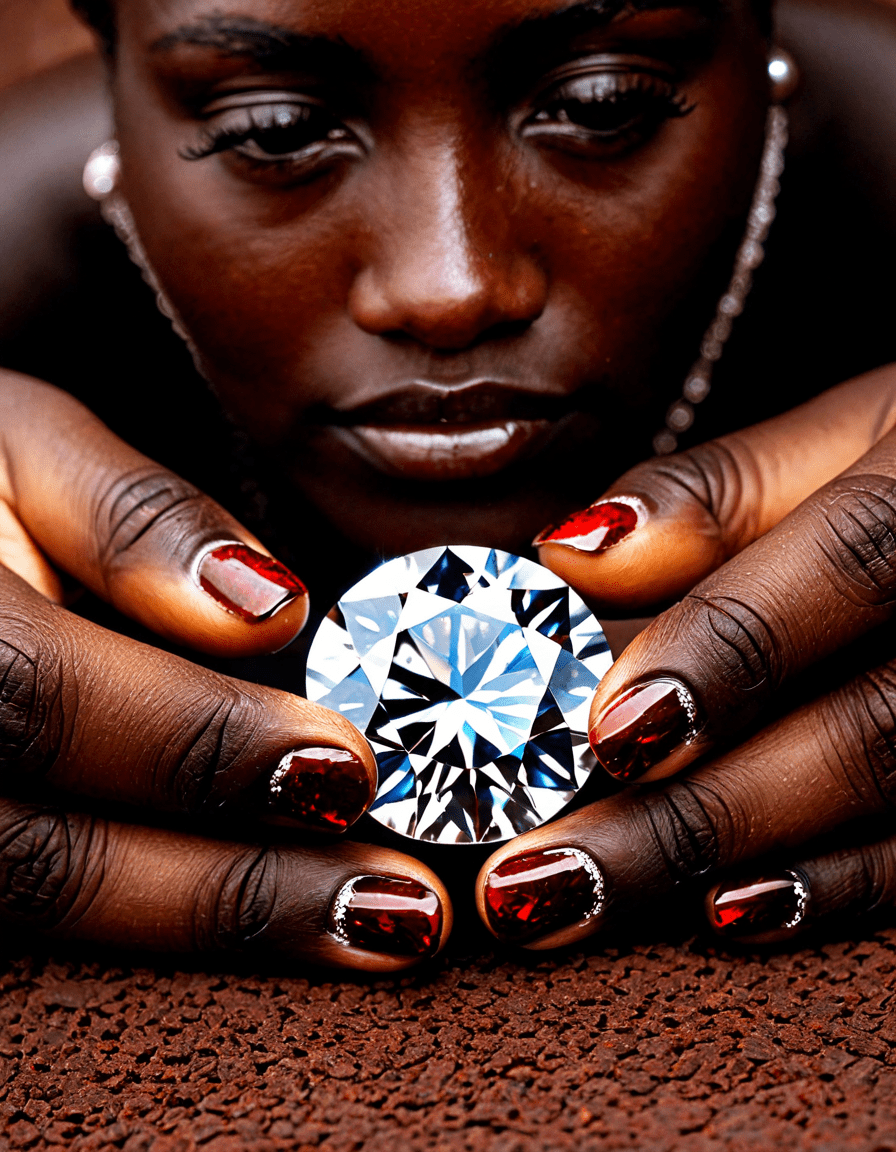
Blood diamonds, often referred to as conflict diamonds, have a notorious reputation that extends far beyond their radiant beauty. Mined in areas stricken by war, these gems serve a darker purpose: financing armed conflict against established governments. This intricate web of violence not only shapes the socio-economic conditions in mining regions but also casts a long shadow over the global trade system itself. As you delve deeper, let’s explore the origins of blood diamonds and unpack the ethical dilemmas that accompany their acquisition.
The term “blood diamond” conjures a vivid and disturbing image, linking these luxurious gems to a painful history. Most notably, the diamond trade became synonymous with violence during the Sierra Leone Civil War, where rebel groups like the Revolutionary United Front (RUF) exploited diamond resources to fund their brutal activities. The socio-economic ramifications of such conflicts remain severe, impacting both local communities and international perceptions of diamond mining as a whole. These brutal realities highlight an urgent need for consumer awareness and ethical consideration.
Despite their stunning allure, blood diamonds carry a heavy bloodline of exploitation and human suffering. This dark underbelly creates a troubling dichotomy: while diamonds symbolize love and commitment for many, they also represent a cycle of violence for those caught in the fray. Awareness surrounding this issue is growing, driven by documentaries and high-profile campaigns, forcing a reckoning that compels consumers to reconsider their diamond purchases. After all, no one wants their engagement ring to come from a place of horror and despair.
The Top 7 Ways Blood Diamonds Fuel Global Conflict and Influence Trade
Blood diamonds are often the lifeblood of rebel factions in war-torn regions. The RUF in Sierra Leone is a prime example, notorious for using diamond sales to acquire weapons, perpetuating a conflict that claimed countless lives. Other groups, like those operating in the Central African Republic, continue this tradition, illustrating the ongoing relationship between diamonds and violence.
The lure of blood diamonds contributes significantly to vast wealth gaps. Take, for instance, the stark contrast between impoverished workers toiling in mines and the multinational corporations reaping enormous profits. This exploitation forces local communities deeper into poverty, as the wealth generated by these precious stones rarely trickles down to those who extract them.
Enter the Kimberley Process Certification Scheme, a global initiative designed to prevent the trade in conflict diamonds. Yet, despite its good intentions, the scheme has been bogged down by the loopholes that allow unregulated diamonds to slip through. Countries like Zimbabwe and their diamond mining practices demonstrate significant failures in compliance, exposing the urgent need for stronger oversight.
As consumers become more aware, ethical consumerism is on the rise, escalating demands for responsibly-sourced diamonds. Brands like De Beers have started to pivot towards ethically sourced stones. However, distinguishing between certified and unverified sources can be confusing, especially for millennials who value social responsibility just as much as aesthetics in their purchases.
Major companies like Tiffany & Co. have faced fierce backlash over sourcing practices. This negative attention has prompted brands to rethink their supply chains, emphasizing transparency as a business strategy. As society increasingly demands accountability, it’s evident that remaining silent on sourcing practices is no longer an option for businesses in the jewelry industry.
The imagery tied to blood diamonds creates a visceral reaction among consumers. Documentaries like “Blood Diamond” spotlight these injustices, raising public consciousness about the human rights violations tied to diamond mining. As the primal fear surrounding these products grows, so does the call for transparency in the supply chain.
Thankfully, hope exists for reform in the diamond industry. Blockchain technology is forging new paths toward accountability, enabling secure tracking of diamond provenance. Companies like Everledger are leading this charge, creating a digital ledger that both consumers and retailers can trust, thus unraveling the tangled histories of these gems.
The Legacy of Bloodborne Diamonds: Cultural Perspectives and Repercussions
“Bloodborne” encapsulates the deep, violent connections inherent in the diamond trade. This term highlights the contrast between diamonds as symbols of love and commitment and the harrowing reality faced by communities affected by diamond mining. The emotional scars left on these societies can be devastating, with trauma echoing through families and generations.
In many cultures, diamonds hold a significant place, celebrated for their beauty and rarity. Yet, their cultural significance is dashed when understanding the context of their acquisition. The stark reality of blood diamonds pulls at the heartstrings, reminding us that beneath the sparkle lies a painful truth that reverberates globally.
Academics and activists alike argue that recognizing the emotional and cultural weight of blood diamonds is crucial. As conversation shifts towards responsible sourcing, understanding this complex narrative encourages more conscientious choices in consumer behavior and pushes brands to align themselves with values that promote human dignity.
Navigating the Blood Meridian: Finding Solutions in a Diamond-Drenched World
The “blood meridian” refers to the fine line between commerce and conflict that surrounds the diamond trade. Recognizing the potential for positive change is critical at this junction. Organizations such as the Diamond Development Initiative are working tirelessly to improve the lives of artisanal miners, thus breaking the cycle of violence associated with diamond extraction.
It’s clear that this isn’t just about shining gems. It’s about the associated human stories and societal changes spurred by responsible diamond mining practices. By focusing on ethical sourcing and innovative solutions, stakeholders contribute to a more sustainable and fair industry.
As discussions about blood diamonds continue to evolve, it becomes essential to address the challenges they present. Movement towards ethical sourcing, consumer awareness, and the implementation of technologies like blockchain can transform how diamonds are viewed in society. It remains to be seen whether blood diamonds can shift from symbols of conflict to beacons of peace and resilience.
Navigating this terrain is crucial not just for brands and consumers but for the global community at large. Together, we can cultivate a diamond trade that reflects not only human ingenuity but also compassion and progress.
As you explore the wondrous world of luxury travel, remember: every piece you wear has a story. Understanding these layers makes your journey richer, just like the experiences that await in vibrant destinations – click here to explore the enchanting landscapes that contrast with the stark realities of our global trade, including the cultural richness of places like China Poblana and heartwarming stories of resilience like those woven into the lives of communities affected by the diamond trade.
Blood Diamond: Shining a Light on Its Dark Impact
The Glittering Trap of Blood Diamonds
You might think diamonds are a girl’s best friend, but blood diamonds tell a darker tale. These gems—mined in war zones and sold to finance conflict—have a price that goes beyond their carats. Interestingly, the term “blood diamond” burst onto the scene in the late 1990s, drawing attention to the human cost behind their shine. A diamond bought for romance could fund atrocities, much like those levied against characters in shows like Austin And Ally, where joy and happiness sometimes clash with sobering realities.
Did you know that during the Sierra Leone Civil War, around 200,000 people lost their lives, with countless more affected by the diamond trade? This escalation made headlines and led to the introduction of initiatives like the Kimberley Process. Speaking of convoluted stories, have you ever seen Moana 2 streaming rumors swirling around? They bring to light the same kind of narrative complexities that blood diamonds embroil in global trade and conflict.
A Colorful World of Conflict
The flip side? Some argue that the very notion of blood diamonds has also led to some positive outcomes, such as stronger regulations in the diamond industry. Compared to the whimsical nature of characters like the Oompa Loompa, these stones represent serious issues with real implications. Did you know that today, around 99% of the diamonds sold in prestigious markets are conflict-free? This is progress, but the historical weight of blood diamonds still lingers.
The conversation doesn’t stop here; much like the buzz surrounding Godzilla Vs Kong, which pits titans against each other, debates on the diamond trade continue to rage. Furthermore, the societal impact of the diamond trade touches us all, from music, where artists like Nipsey Hussle have referenced these themes in their lyrics, to social media discussions that echo the complexities of the trade, reminiscent of the voices found on platforms like Libs Of Tiktok Twitter. As consumers, making informed choices matters, just like choosing the right running sunglasses for your outdoor adventures. The urgency of this knowledge is paramount; after all, each decision we make can either contribute to or combat the age-old struggles provoked by blood diamonds.