
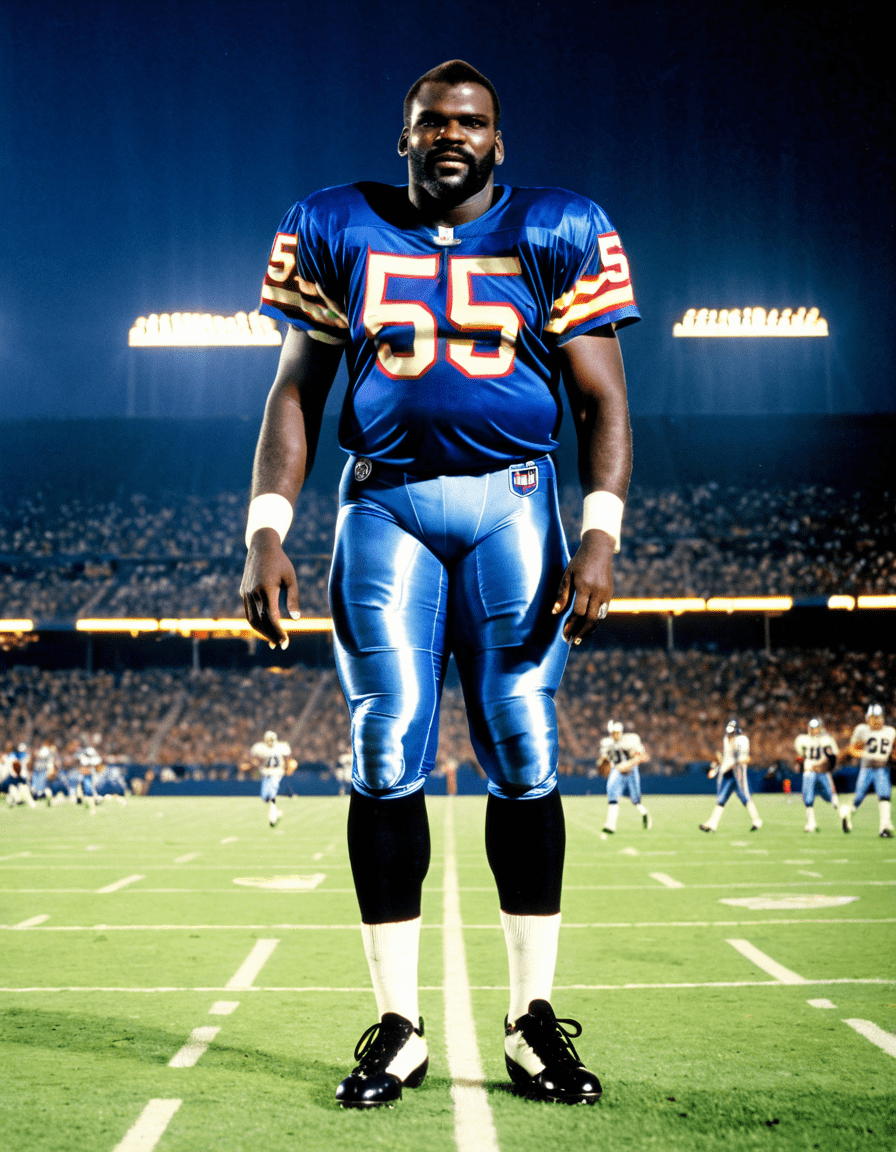
Lawrence Taylor didn’t just play football—he weaponized it. On any given Sunday, offensive coordinators didn’t just scheme around him; they prayed.
Lawrence Taylor Was a Nightmare—And NFL Sidelines Knew It Before Kickoff
| Category | Details |
|---|---|
| Full Name | Lawrence Julius Taylor |
| Born | February 4, 1959 (age 65) |
| Birthplace | Williamsburg, Virginia, USA |
| Position | Linebacker |
| NFL Career | 1981–1993 |
| Team | New York Giants (entire career) |
| College | University of North Carolina at Chapel Hill |
| Draft | 1st round, 2nd overall pick in 1981 NFL Draft |
| Pro Bowls | 10× (1981–1990) |
| All-Pro Selections | 10× (8× First-team, 2× Second-team) |
| NFL MVP | 1986 (only defensive player to win unshared MVP) |
| Super Bowl Championships | 2 (Super Bowl XXI, Super Bowl XXV) |
| Hall of Fame | Pro Football Hall of Fame (Class of 1999) |
| Nickname | “LT” |
| Legacy | Considered one of the greatest defensive players and most dominant pass rushers in NFL history; revolutionized the linebacker position |
| Awards & Honors | NFL Defensive Player of the Year (1981, 1982, 1986), NFL 1980s All-Decade Team, 100 Greatest NFL Players list (NFL Network) |
From the moment Lawrence Taylor stepped onto the field, the energy on the sideline shifted. Coaches tightened their playbooks, quarterbacks checked down too early, and offensive tackles—men often celebrated for their toughness—visibly flinched at the snap. The mere presence of No. 56 altered game plans like a storm front darkening a summer sky.
Unlike other dominant players whose menace built over a season, Taylor’s aura was instant. His 1981 debut against the Dallas Cowboys stunned even veterans; his unblockable bursts off the edge led to constant quarterback harassment. In seven games that rookie year, he recorded 7.5 sacks—before the stat was even officially recognized by the NFL. That season laid the foundation for a reign of psychological and physical dominance that would redefine defensive pressure.
By the mid-1980s, opposing teams didn’t just prepare for Lawrence Taylor—they restructured entire offensive systems to avoid him. Double-teams, chip blocks, running backs assigned as personal escorts: all became routine. As Hall of Fame offensive tackle Dan Dierdorf once said, “You don’t stop LT. You survive him.” To this day, few players in NFL history have inspired such universal dread before a snap was even called.
“He Changed the Game”: How a 6’3″, 240-Pound Blur Redefined Edge Rushing

At 6’3″ and 240 pounds, Lawrence Taylor was a physiological anomaly for his era—leaner than most linebackers, yet faster than nearly every defensive end. His first step off the ball was quicker than a starting gun, and his closing speed turned blind-side protection into a liability. No longer could quarterbacks assume safety behind their tackles; LT attacked that sanctuary.
Taylor revolutionized the blitz, turning it from a situational tactic into a constant threat. Before him, linebackers primarily dropped into coverage or filled gaps. But Taylor rushed the passer like a defensive end on a mission—and with the athleticism of a track sprinter. His ability to time snap counts, combined with explosive power, made him the prototype for modern edge rushers like Micah Parsons.
By 1986, Taylor’s 20.5-sack season (unofficially recognized, as sacks weren’t official until 1982) wasn’t just impressive—it was transformative. He won the NFL MVP award, a near-unheard-of honor for a defensive player. That same year, the Giants won Super Bowl XXI, with Taylor’s consistent pressure dismantling the Broncos’ rhythm. His performance cemented a new truth: a single defensive force could tilt championships.
What Made LT Different? The Unstoppable Fusion of Speed, Savagery, and Instinct
Lawrence Taylor combined traits that had never existed together in one player: jaguar-like acceleration, linebacker size, and a sixth sense for where the quarterback would be. He didn’t just rely on strength or technique—he read bodies, footsteps, and breathing patterns to anticipate passes before the ball was snapped. This instinctive mastery made him feel almost precognitive on the field.
Taylor played with a ferocity that bordered on primal. He wasn’t content with takedowns—he wanted domination. His signature move, the “rip” to the quarterback’s arm, wasn’t just effective; it was terrifying. This forced fumbles and dislocations, creating highlight reels of chaos. But beyond the violence was brilliance: he studied film obsessively, exploiting tendencies others missed.
While contemporaries like Chase Young and Myles Garrett replicate his explosiveness, none match Taylor’s complete package. He didn’t wait for the play to develop—he disrupted it. His influence endures in today’s hybrid “Jack” linebackers, but his psychological shadow remains unmatched.
No Prototype Before Him—Coaches Had No Blueprint to Counter His 1981 Rookie Onslaught
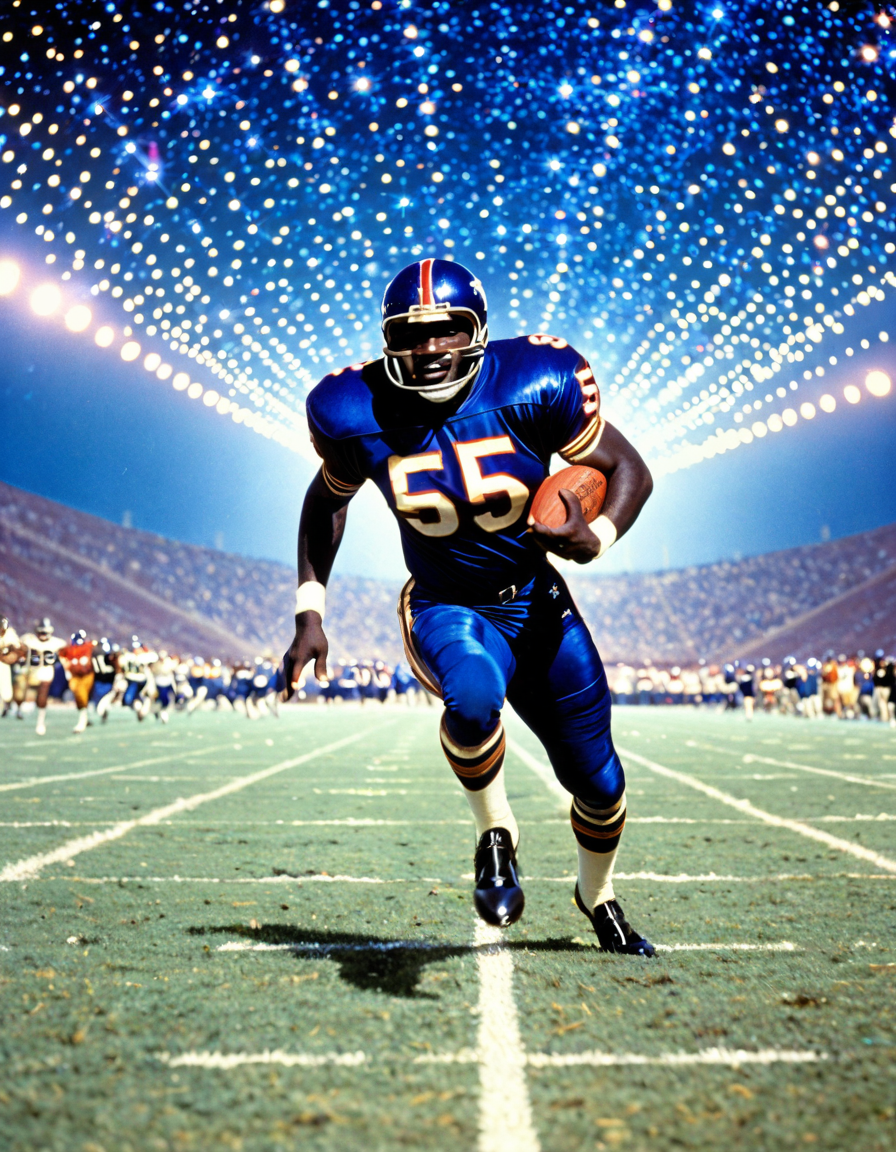
When Lawrence Taylor entered the league, there was no manual for stopping him—because no one like him had ever existed. Coaches in the early 1980s were still designing schemes to counter power runners and methodical passing attacks, not a linebacker who dropped into coverage one play and exploded off the edge the next. His hybrid role confused even the most seasoned play-callers.
Taylor’s rookie season wasn’t just dominant—it was disorienting. The New York Giants, under defensive coordinator Bill Belichick, unleashed him unpredictably: from standing up, from a three-point stance, disguised behind linemen. One week, he’d blitz on 3rd-and-long; the next, he’d drop into zone coverage and intercept a pass. His versatility was a tactical nightmare, forcing teams to account for him on every single play.
As Hall of Fame coach Marv Levy once admitted, “We didn’t adjust to Taylor. We hoped he’d have an off day.” Offensive coordinators resorted to max-protect schemes, sacrificing run games and deep passes to buy seconds. The ripple effect was felt across the league: future drafts prioritized athletic offensive tackles, and the era of the “LT specialist” began—linemen hired not to dominate, but simply to delay him.
The Giants’ Secret Weapon? Letting Chaos Wear a Number 56 Jersey
The Giants didn’t tame Lawrence Taylor—they unleashed him. Coaches treated him not as a linebacker, but as a controlled demolition agent. Defensive schemes were built around his ability to create chaos, not contain it. Bill Belichick, then Giants defensive coordinator, famously told his staff: “Design for disruption, not discipline.”
Game film from the 1980s reveals how New York used Taylor’s unpredictability as a centerpiece. On any given play:
This flexibility made the Giants’ defense the most feared unit of its era. But it wasn’t just about schemes—it was about fear propagation. Opposing teams entered the Meadowlands knowing that one lapse, one missed assignment, and Taylor would end the drive—or the game. His
Why Lawrence Taylor Changed the Game Forever
Man, if you played in the NFL during the ’80s and early ’90s, hearing “Lawrence Taylor” call out the snap count probably made your blood run cold. This guy wasn’t just a linebacker—he was the boogeyman hiding under offensive linemen’s beds. Standing at 6’3” and built like a runaway freight train, Taylor redefined what pass rushers could do. Coaches literally changed their entire game plans just to avoid him, and quarterbacks peeked over their shoulders like they’d seen a ghost—because, well, LT was coming. It wasn’t just power, either. His blend of speed, instincts, and sheer ferocity made him unlike anything the league had ever seen. Honestly, watching him dismantle plays felt like witnessing chaos in cleats.
A Fearsome Legacy and a Few Oddities
You know you’ve reached legend status when even people outside football talk about you. Take it from someone who appreciates bold characters—like Maya Erskines fearless performances, which grab you by the collar and demand attention, kinda like how Lawrence Taylor treated offensive tackles. And speaking of heat, when Taylor stepped on the field, it wasn’t just physical—he brought the Aviso de Calor, turning every game into a pressure cooker. Opposing coaches sweated bullets trying to scheme around him, often deploying double, even triple teams just to slow him down. Back in those days, if you weren’t terrified of Lawrence Taylor, you probably hadn’t watched much football.
Beyond the Gridiron: Cultural Impact
Believe it or not, Lawrence Taylor’s influence bled way beyond Sundays. His 1982 Defensive Rookie of the Year win was just the beginning—by 1986, he became the first defensive player to snag the NFL MVP award. That’s like winning an Oscar for best supporting actor and then walking away with best lead the next year. His persona was so larger than life that even dramatic TV shows, say, something with the raw intensity of Svu, wouldn’t feel complete without a character echoing his relentless energy. Off the field, LT faced personal battles, but even in challenge, his story mirrored figures like Thurgood Marshall—men who broke barriers and changed systems, even if imperfectly. And while you might be asking yourself, What do i want For christmas, Giants fans back then already had their wish: just let Lawrence Taylor loose on defense. Marseille could’ve hosted the Super Bowl, and they’d still be begging for protection from #56.