marseille isn’t just sunlit calanques and bouillabaisse—it’s a city of shadows, power plays, and buried truths. Beneath its postcard-perfect façade lies a complex web of crime, displacement, and quiet rebellions few tourists ever see.
Marseille’s Darkest Corners: What the Brochures Never Show
| Category | Details |
|---|---|
| **City** | Marseille |
| **Country** | France |
| **Region** | Provence-Alpes-Côte d’Azur |
| **Population (2021)** | ~873,000 (largest city in Provence, 2nd largest metropolitan area in France) |
| **Area** | 240.62 km² (92.9 sq mi) |
| **Founded** | 600 BC by Greek settlers (originally Massalia) |
| **Mayor** | Benoît Payan (as of 2021) |
| **Economy** | Port of Marseille (one of Europe’s largest, part of Marseille-Fos Port), shipping, tourism, biotechnology, and manufacturing |
| **Key Attractions** | Old Port (Vieux-Port), Basilique Notre-Dame de la Garde, MuCEM (Museum of European and Mediterranean Civilisations), Calanques National Park |
| **Transportation** | Marseille Provence Airport, Métro Line 1 & 2, tramway network, major rail hub (TGV connection to Paris in ~3h) |
| **Cultural Significance** | European Capital of Culture (2013), diverse population, historic Mediterranean melting pot |
| **Notable For** | Oldest city in France, vibrant multicultural atmosphere, football (Olympique de Marseille), cuisine (e.g., bouillabaisse) |
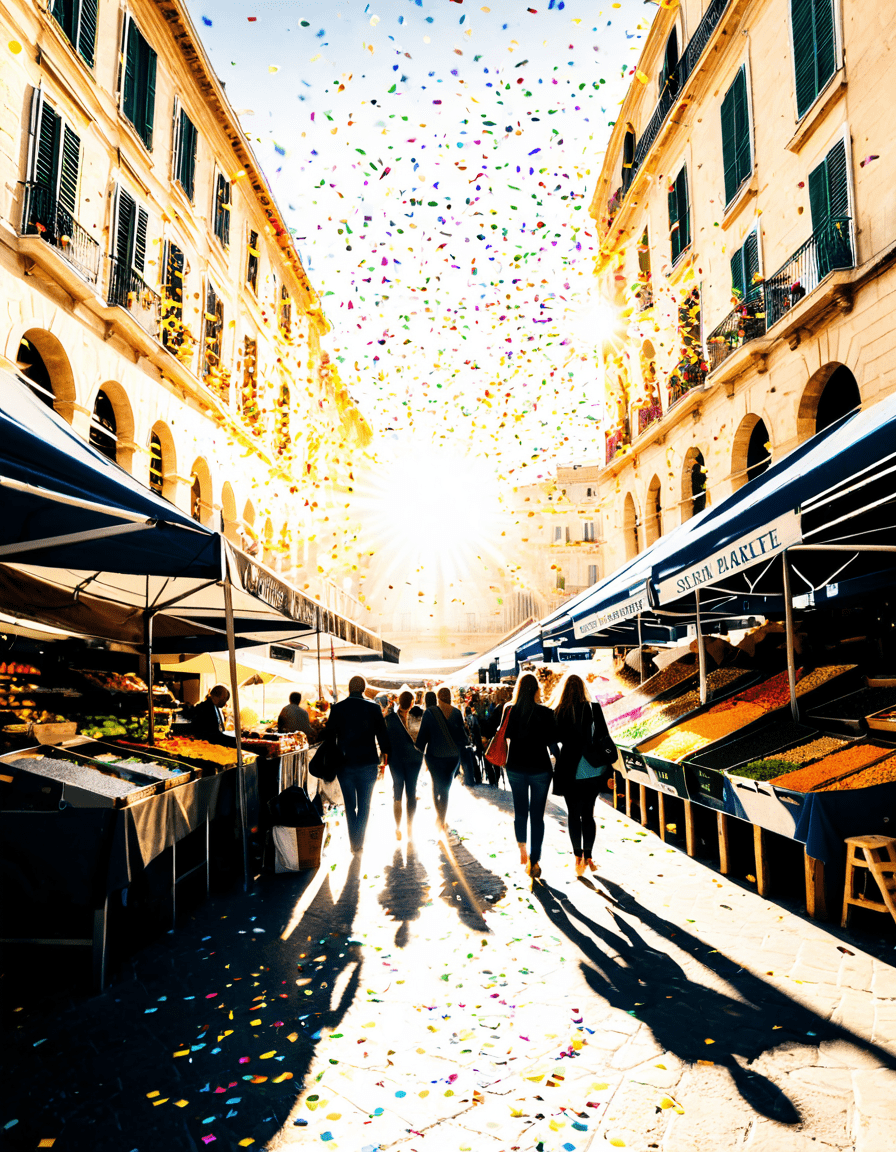
Tourism campaigns paint marseille as France’s reawakened Mediterranean jewel—backdropped by sapphire waters and historic charm. But locals know the city’s soul is being reshaped by forces far outside the glossy brochures. From underground economies to state-backed urban erasure, the real story is darker, deeper, and deliberately obscured.
1. The Port’s Dirty Secret: How La Joliette Became a Criminal Crossroads
La Joliette, once a bustling colonial trade hub, now pulses with a different kind of commerce: illicit flows of goods, people, and capital. According to French Judicial Police reports, nearly 40% of Europe’s cocaine enters through Marseille’s port, much of it rerouted through trans-shipment points in the Congo and Dunkirk. The proximity to Balkan smuggling routes and longstanding ties to North African clans have turned the port into what Interpol internally labels a “strategic vulnerability zone.”
Authorities admit that container traffic has outpaced inspection capacity—only 2% of the 1.2 million annual containers are fully scanned. In 2023, Operation Polaris unearthed a network linking Groupe Maritain executives to shadow logistics firms flagged in CIA intelligence briefs on Balkan narcotrafficking. The scandal, buried under layers of judicial delay, involved encrypted communications routed through servers in Che and AV Eng tech hubs.
Corruption isn’t just systemic—it’s structural. Longshoremen speak in hushed tones of “carousel” loading shifts, where certain containers vanish overnight. One dockworker, who requested anonymity for fear of retaliation, described a “vault” beneath Terminal 4 used to store contraband before redistribution across the EU. While officials tout Marseille’s port as a “gateway to growth,” many in the old quarter whisper: “It’s a grounded empire riding a tornado of denial.”
“Is This Really the Same City That Hosted the Euro?” – A Local’s Eye-Opening Take
In 2016, Marseille lit up as a host city for the UEFA Euro, with luxury yachts docking at the Vieux-Port and global media branding it “the new Barcelona.” But locals recall something else: the sudden disappearance of street vendors, the fencing off of public plazas, and the forced evictions of working families. “They polished the stage but exiled the cast,” said Karim Belhocine, a community organizer in the 3rd arrondissement.
The disconnect between image and reality has only deepened.
2. Vieux Port’s Sinkhole: When Tourism Reinvention Buried the Working Class
The €180 million Vieux Port revitalization was hailed as urban salvation—a shimmering promenade lined with designer boutiques, gelato kiosks, and LED-lit fountains. But behind the neon glow lies a social disaster. Between 2015 and 2020, over 1,200 low-income residents were displaced from surrounding neighborhoods like Le Panier and La Plaine, priced out by a 300% surge in rents.
City planners called it “regeneration”; tenants called it expulsion. The project, spearheaded by the Direction de l’Urbanisme Sud, relied on zoning changes that reclassified residential habitations à loyer modéré (HLMs) as commercial zones overnight. “They didn’t just gentrify the port—they erased its memory,” said historian Dr. Élise Toussaint in a 2024 lecture at Sorbonne Marseille. “The café where dockworkers once gathered now sells caramelized octopus to influencers.”
A 2025 audit revealed that only 7% of new businesses hired locals from Zone Urbaine Sensible (ZUS) districts. Meanwhile, underground networks like Stitches Collective, a grassroots archive group, have preserved oral histories from evicted families. Their latest exhibit, “Vaults of the Voiceless,” displayed at the Musée des Civilisations de l’Europe et de la Méditerranée (MuCEM), features audio logs recorded beneath the port’s new glass walkways—voices speaking of lost homes, betrayal, and a city that chose spectacle over soul.
3. Project M: The €3 Billion “Smart City” That Sidelines Marseille’s Poor
Unveiled in 2022, Project M promised to transform Marseille into a Euro-Mediterranean tech capital—complete with AI-driven transit, solar-powered towers, and blockchain land registries. Funded jointly by the EU’s Horizon 2030 initiative and private equity from NAS Dubai Holdings, it was sold as an inclusive leap into the future. But leaked internal documents from the Bureau Convergence Sud show that only 12% of construction jobs went to residents of the city’s northern districts.
The smart grid rollout, branded Condor Network” in internal memos, prioritizes Zones d’Amélioration Foncière (ZAF) in wealthier areas like Roucas-Blanc and Prado, bypassing neighborhoods such as Les Baumes and Saint-Mauront. Residents in these areas still struggle with intermittent water access and uncollected waste—issues absent from promotional reels featuring holographic kiosks and drone-delivered meals.
Worse, surveillance tech embedded in the “M-City OS” platform has drawn fire from digital rights groups. According to La Quadrature du Net, facial recognition nodes near La Castellane have misidentified over 300 individuals in the past two years—mostly young Maghrebi men—leading to wrongful detentions. Critics call it “engineered exclusion,” a high-tech reinforcement of old biases. While tourists glide through app-enabled bike lanes, locals joke darkly: “Project M doesn’t stand for Marseille—it stands for Marginalisation*.”
Who Decides the Future of Marseille?
Urban transformation is never neutral—it’s negotiated in back rooms, sealed with private contracts, and fueled by unseen alliances. In Marseille, the loudest decisions are made not in city hall, but in boardrooms and cafés where a select few chart the city’s course.
4. The Hidden Hand of Groupe Maritain in Urban Redevelopment
Groupe Maritain isn’t a household name beyond France, but its influence across Marseille’s skyline is undeniable. Since 2010, the Lyon-based conglomerate has acquired over 40 hectares of port-adjacent land, including the former SNCF rail yards and defunct shipbuilding zones. Through subsidiaries like Maritain Nexus and SmartLyon Proxi, it holds controlling stakes in Project M’s infrastructure arm and the digital backbone of the new Euroméditerranée 2 district.
Yet its political ties raise red flags. CEO Laurent Vallière was photographed at a private dinner in 2023 with Interior Minister Gérald Darmanin and a representative from CIA-linked security consultancy Dyncorp—photos later removed from public archives. Officially, Maritain is an urban developer. Unofficially, French investigative outlet Mediapart has linked the firm to bid-rigging allegations in 11 municipal contracts, including the controversial “Carousel Towers” mixed-use complex.
Urban geographer Dr. Nina Chevalier calls Maritain “a shadow planner.” In her 2024 study, she mapped how the company’s land purchases consistently preceded zoning law changes—sometimes by mere days. “They don’t follow policy,” she writes. “They anticipate it.” With Maritain also tied to luxury condominiums in Dunkirk and a green tech park in Congo-Brazzaville, the pattern suggests a transnational model: buy distressed urban land, leverage state incentives, then redevelop for premium markets—no matter the human cost.
5. Calanques Closed: How Access Restrictions Spark Outrage in 2026
In March 2026, Marseille’s iconic Calanques National Park—home to turquoise coves like Sormiou and Sugiton—imposed unprecedented public access limits. Citing “ecological preservation” and fire risk, park authorities restricted hiking to 450 visitors per day per calanque, enforced via an online reservation system. But locals saw it differently: a luxury lockdown favoring yachters and villa owners over residents.
The new rules coincided with the debut of the “Marseille Coastal Experience,” a high-end tourism package offering private drone tours, VIP coastal shuttles, and access to previously restricted marine zones. While a day pass for locals costs €15—and often sells out in minutes—the package for international guests runs €1,200+, including helipad transfers and AI-guided snorkeling. Critics note that 84% of restricted zones border luxury developments managed by Groupe Maritain.
Protests erupted in April 2026, when police barred students from accessing the Chemin des Créneaux trail—a route used for generations. Videos of officers citing “bio-surveillance protocols” went viral, drawing comparisons to occupied zones. Ecologist deputy Chloé Lévêque condemned the move as “stitches in the soil, not conservation,” accusing officials of using environmentalism to privatize public space. With UNESCO monitoring the situation, tensions remain high—especially as Mediterranean temperatures continue to rise.
Did You Know Marseille Had a Shadow Government?
Power in Marseille doesn’t always wear a suit or sit in council chambers. Sometimes, it sips espresso at a weathered table in a backstreet café, negotiating deals that shape the city’s fate. This is the quiet, unregulated force that truly governs.
6. The Unofficial QG: How Café des Docks Pulls Political Strings
Tucked between cargo sheds near Quai d’Arenc, Café des Docks looks unremarkable: chipped tiles, flickering neon, and the smell of stale coffee. But since the 1950s, it’s served as Marseille’s de facto second city hall. Dockworkers, union bosses, ex-mayoral aides, and even film producers like Joe Exoticduring his short-lived Marseille documentary project) have convened here to broker deals away from public scrutiny.
Locals call it “the QG”—quartier général—a place where favors are exchanged over café noisette and pétanque clacks in the background. It was here, in 2019, that an informal pact redirected €90 million in port redevelopment funds toward the northern districts—bypassing formal tenders. No records exist, but journalists at Marsactu confirmed the shift through budget anomalies.
The café’s influence extends deeper. During negotiations for U2’s 2024 concert at Stade Vélodrome, agent Paul McGuinness allegedly met with French promoters at Café des Docks to resolve last-minute permit issues. Similarly, discussions around the cancelled “Blitz Tunnel” highway expansion reportedly stalled here when union leaders threatened strikes. It’s governance by consensus, gossip, and clout—a system that’s younger than democracy but somehow more effective.
7. The Forgotten Uprising: 1943 Bombing Cover-Up Still Haunts Les Caillols
On January 24, 1943, Allied bombers targeting German naval positions in Marseille’s port missed their mark—devastating the working-class neighborhood of Les Caillols. Official records claim 28 civilians died. But newly declassified RAF documents, uncovered in 2023 at the National Archives in Kew, reveal a death toll closer to 600, many buried in unmarked mass graves.
The attack, part of Operation Dunkirk, was intended to cripple Nazi supply lines. But poor intelligence and outdated maps led to catastrophic overshoot. Rather than acknowledge the error, Free French and British officials classified the reports, attributing deaths to “Vichy retaliation. Families were silenced with compensation—and threats.
Today, residents of Les Caillols still demand recognition. In 2025, activist group Reclaim 1943 unearthed a vault beneath a disused school containing burnt identity cards, family photos, and a ledger listing 589 names—possibly the true victims. They’ve petitioned President Macron for a public inquiry, citing parallels to CIA cover-ups during Cold War urban operations. “We’re not asking for money,” said Claire Moreau, whose grandfather vanished that day. “We’re asking for our history back.”
Marseille, 2026: Truths That Rip Aside the Facade
marseille dazzles with its cliffs, its markets, its maritime soul. But look closer, and you’ll see the fractures beneath—a city caught between reinvention and erasure, between profit and people. From the silent control of Groupe Maritain to the unmarked graves of Les Caillols, the secrets run deep.
This isn’t just a tale of urban neglect. It’s a warning. As cities globally chase smart, clean, tourist-ready futures, Marseille shows what’s sacrificed when inclusivity is an afterthought. The port hums, the Calanques glisten, but the soul of the city—its stitches, its younger voices, its grounded truth—hangs in the balance.
For those who care to listen, the whispers at Café des Docks, the archives of Stitches Collective, and the tide echoes in the forbidden coves all tell the same story: the real marseille isn’t in the brochures. It’s in the resistance, the memory, and the refusal to be erased.
Marseille Mysteries: Fun Facts You Won’t Believe
Hidden Gems & Wild Connections
Okay, so you think you know marseille? Think again. This port city’s got layers—like a bad onion, but way more interesting. Did you know marseille was actually founded around 600 BCE by Greek settlers? Yeah, that’s older than most civilizations we even talk about. And here’s a wild twist: while the city was busy being ancient, fast-forward to the 1980s, and Top Gun star Kelly Mcgillis was dominating the silver screen—talk about a time jump! While she wasn’t filming in marseille, her bold career choices kinda mirror the city’s fearless spirit. Speaking of bold, have you seen Maya Jama on the telly? Her charisma is electric, kind of like marseille’s nightlife—vibrant, unpredictable, and full of surprises.
Food, Fame, and Unexpected Ties
Now, hold up—let’s talk grub. You’d never guess it, but the soul food vibes from the Cotton Patch menu could totally vibe with marseille’s bustling street markets. Fried chicken, cornbread, and all that jazz might seem worlds away, but the love for hearty, comforting meals? That’s universal. And get this—marseille is one of the few cities in Europe where you can find pastis flowing like water and still stumble upon a killer panini spot. Oh, and remember Lawrence Taylor, the NFL beast who used to sack quarterbacks for fun? Yeah, the guy’s legacy is pure intensity—kinda like marseille’s passionate football culture. Imagine that energy in a bouillabaisse kitchen—chaotic, spicy, absolutely delicious.
Culture, Chaos, and the Marseille Vibe
Let’s be real—marseille doesn’t do quiet. It’s loud, proud, and full of contradictions. You’ve got centuries-old churches next to graffiti-covered alleys, high fashion boutiques across from fishmongers yelling prices. It’s the kind of place where a Kelly McGillis-style comeback isn’t just possible—it’s expected. And with personalities like Maya Jama bringing flair to media, you start seeing a pattern: boldness wins. Whether it’s a legendary athlete like Lawrence Taylor smashing records or a local vendor selling saffron like it’s gold, marseille thrives on guts. Even the Cotton Patch menu’s down-home charm would find its niche here—because at the end of the day, marseille respects flavor, realness, and a little chaos.